
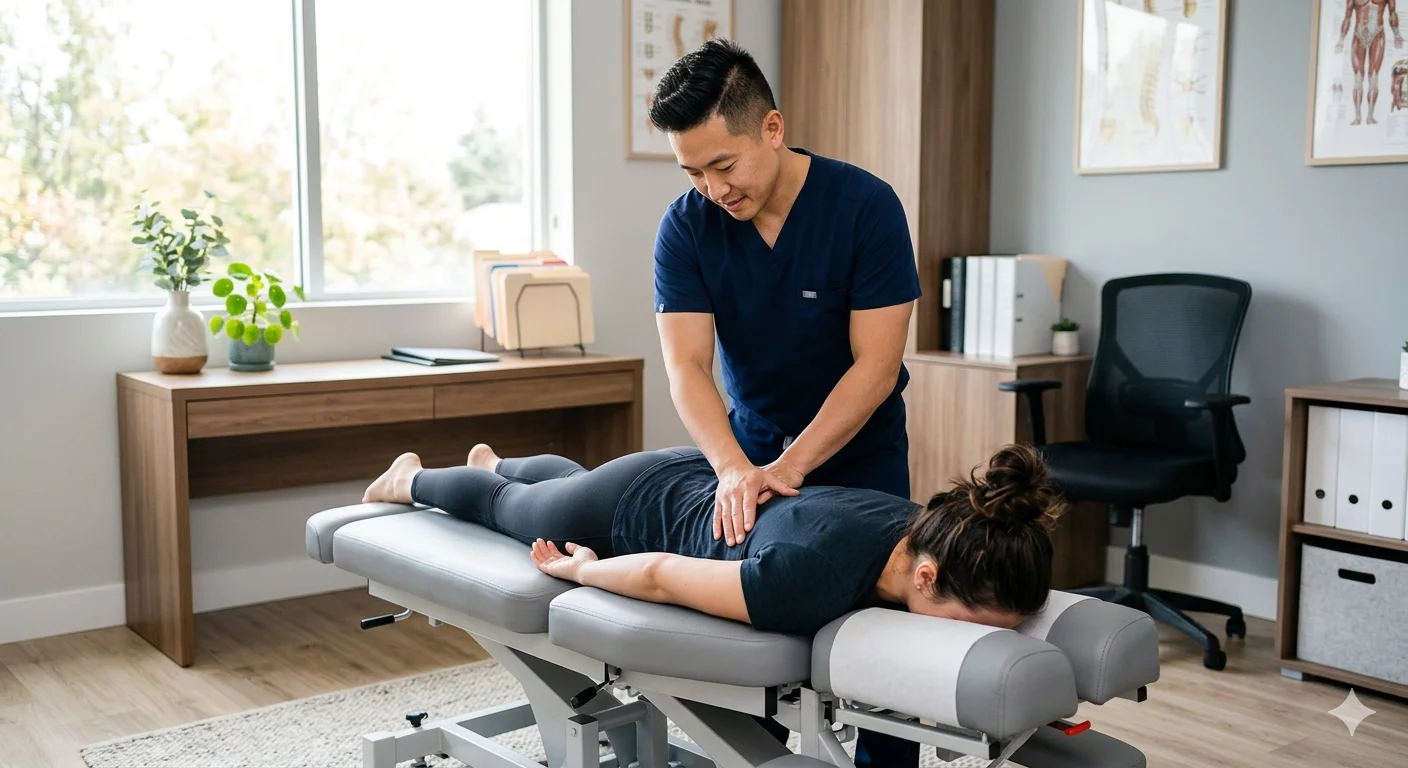
It is one of the most common questions we hear: "Does chiropractic hurt?" Maybe you saw a video online of someone getting their neck cracked and it looked intense. Maybe a friend said their adjustment left them sore for a day. Those experiences are real, and the concern is completely fair. But chiropractic care covers a wide range of techniques, and plenty of them are remarkably gentle. What your visit feels like depends a lot on the approach your chiropractor uses.
Why People Assume Chiropractic Has to Be Rough
Most of what people picture when they hear "chiropractic adjustment" is the high-velocity, high-amplitude technique that often produces a popping or cracking sound. That sound is actually just gas releasing from the joint, not anything breaking or snapping. Still, the anticipation of it can be enough to make someone tense up, and tension never helps.
There is also a cultural idea that "no pain, no gain" applies to healthcare too. It does not. Discomfort is not a measure of how effective a treatment is, and a good chiropractor is not trying to push through your pain to reach some imaginary threshold.
What a Gentle Chiropractic Adjustment Actually Feels Like
A gentle chiropractic adjustment uses controlled, low-force movements targeted at specific areas of the spine or joints. Many patients describe the sensation as mild pressure, a slight release, or simply warmth in the area being worked on. Some people feel nothing dramatic at all during the adjustment itself, just a gradual sense of ease as they get off the table.
Techniques like the Prone Specific method used at New Leaf Chiropractic are designed to work with your body rather than against it. There is no twisting, no sudden jolts, and no need to brace yourself. The goal is precision, not force.
Is There Any Normal Soreness Afterward?
Some patients do notice mild soreness in the treated area for a day or two after their first couple of visits, similar to the feeling after a good stretch or light workout. This is normal and usually fades quickly. It is not the same as being hurt. If you experience anything beyond mild soreness, that is worth mentioning to your chiropractor right away.
Chiropractic Without Cracking: Yes, That Exists
If the cracking sound is specifically what worries you, it is worth knowing that chiropractic without cracking is a legitimate option. Low-force techniques can achieve spinal mobilization and improved joint function without producing any audible pop at all. The sound is a side effect of the technique, not the treatment itself. You are not missing out on results just because you do not hear anything.
Explore the full range of services available at New Leaf Chiropractic to get a clearer picture of what a visit might involve for your specific situation.
When to Seek Professional Evaluation
If you are dealing with persistent neck or back pain, headaches, or discomfort that is affecting your daily life, a chiropractic evaluation is a reasonable first step. Most musculoskeletal issues respond well to conservative care, and a chiropractor can help you understand what is going on and whether chiropractic is a good fit.
That said, there are situations where you should seek urgent medical attention rather than scheduling a chiropractic appointment. These include severe pain following trauma or an accident, numbness or weakness spreading down your arms or legs, loss of bladder or bowel control, pain accompanied by fever or unexplained weight loss, or chest pain. These symptoms need to be evaluated by a physician promptly.
A responsible chiropractor will not treat you if your condition calls for a different kind of care. Part of the job is knowing when to refer out.
Why Patients in Hurst, Euless, Bedford, and North Richland Hills Choose a Gentle Approach
The Mid-Cities area has a lot of active people, from parents hauling kids around to workers spending long hours at a desk, folks who need relief without being sidelined by a rough treatment. Gentle chiropractic fits that life. Patients come in, get a focused adjustment, and get back to their day feeling better rather than needing to recover from their recovery.
Dr. Begin has built his practice around the idea that effective care does not have to be forceful. Patients often come in nervous and leave genuinely surprised by how calm and comfortable the whole experience was.
Frequently Asked Questions
Does a chiropractic adjustment hurt?
For most people, a well-performed adjustment does not hurt. You may feel pressure or a mild stretching sensation, but sharp or significant pain is not normal and should be communicated to your chiropractor immediately.
What if I am nervous about the cracking sound?
Tell your chiropractor before the visit. There are effective low-force techniques that do not produce any audible pop. Your comfort matters and a good chiropractor will work with you, not around you.
How will I feel after my first adjustment?
Many patients feel some immediate relief or a sense of lightness. Others notice mild soreness for a day or two. Both responses are normal. Drink plenty of water and let your chiropractor know at your next visit how you felt.
Is gentle chiropractic as effective as traditional adjustments?
Effectiveness depends on finding the right technique for your specific condition, not on how forceful the treatment is. Low-force approaches can be highly effective, especially for people who are sensitive, elderly, or dealing with acute pain. If you want a deeper look at how gentle care works, the post on what gentle chiropractic care actually is is a good place to start.
Can chiropractic care make things worse?
Temporary mild soreness is common and not a sign things are getting worse. A thorough intake exam helps your chiropractor identify any contraindications before treatment begins. If you have concerns about your health history, bring them up during your evaluation.