
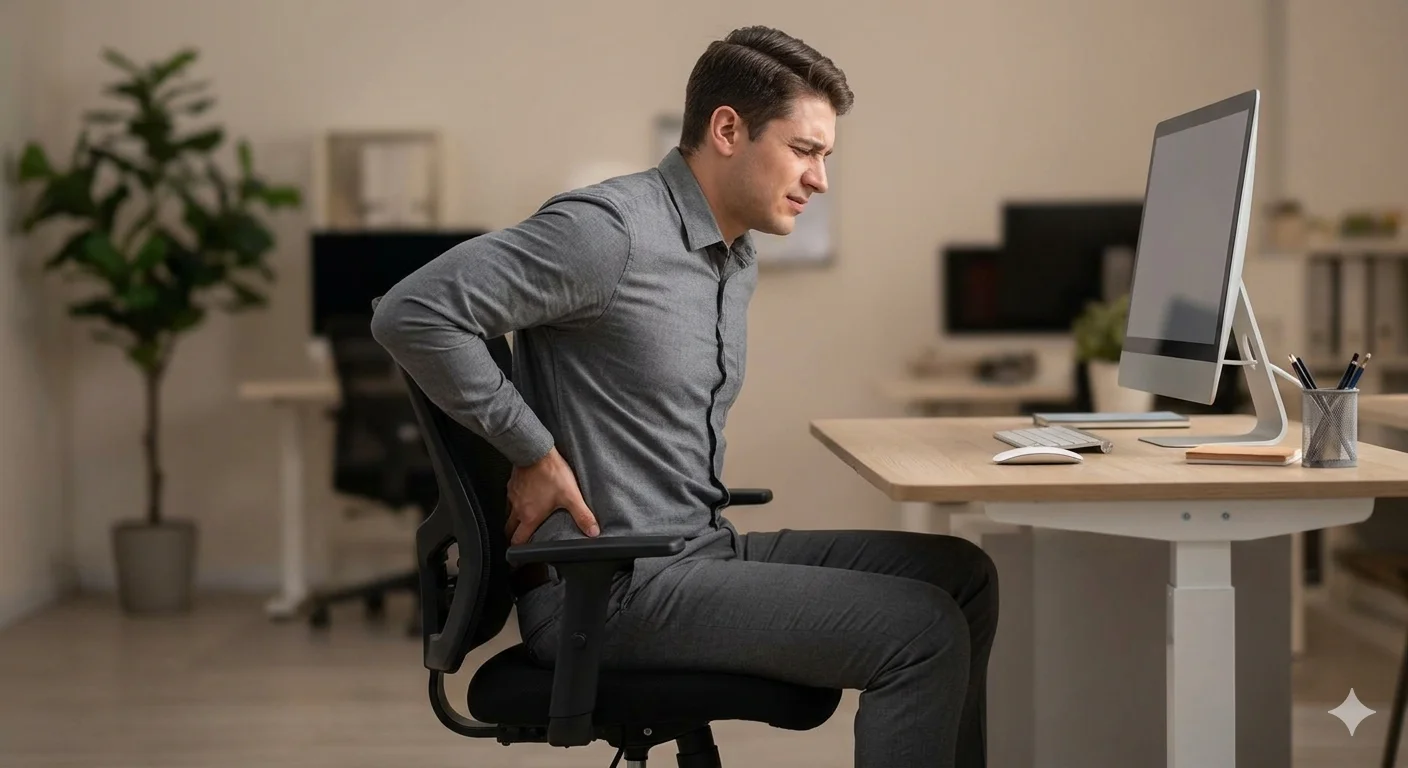
You sit down to get some work done, maybe answer emails or join a video call, and somewhere along the way your lower back starts to ache. By the time you finally stand up, it feels stiff, sore, or just plain wrong. Sound familiar? You are not imagining it, and you are definitely not alone. Back pain from sitting is one of the most common things people mention when they come in to see us.
The good news is that this kind of pain is usually something we can get to the bottom of. Let's talk about what is likely going on and what your options might be.
Why Sitting Puts Stress on Your Back
It might seem counterintuitive. You are resting, after all. But sitting, especially for long stretches, actually puts more pressure on the lumbar discs and surrounding structures than standing does. When you sit, the natural curve of your lower spine tends to flatten out, muscles that normally support your posture start to disengage, and the tissues around your spine can become irritated over time.
A few things tend to make it worse:
- Slouching or forward head posture - Most people do not sit perfectly upright. Over hours, that rounded posture adds up.
- Staying in one position too long - Even good posture gets old. Movement helps circulate fluid through your discs and keeps soft tissues from tightening up.
- Chair height and screen position - If your workstation is not set up well, your body compensates in ways that cause strain.
- Existing spinal issues - Problems that might not bother you much when you are active can flare up when you are stationary.
There is more detail on the specific mechanisms behind this on our page about common causes of lower back pain if you want to dig deeper.
Common Conditions Behind Sitting-Related Back Pain
When someone comes in saying their back hurts after sitting, a handful of culprits tend to come up most often:
Muscle Tension and Postural Strain
This is the most straightforward one. The muscles and connective tissue around the spine get overworked trying to hold you upright, particularly when posture is less than ideal. They fatigue, tighten, and eventually start sending pain signals.
Spinal Joint Dysfunction
The small joints along your spine (called facet joints) can lose their normal movement patterns. When that happens, surrounding muscles often tighten up to compensate, which makes things worse. Sitting compresses these joints, which can aggravate them.
Disc Irritation
The cushioning discs between your vertebrae handle a lot of load when you sit. If a disc is already under stress or has some wear on it, prolonged sitting can push it over the edge into pain or stiffness.
Tight Hip Flexors
When you sit for hours, your hip flexors shorten. Over time, tight hip flexors pull on the lumbar spine and contribute to lower back pain even after you stand up. Stretching helps, but it often does not fully address what is happening structurally.
How Gentle Chiropractic May Help
Chiropractic care is not a cure for everything, and we will never tell you it is. But for many people dealing with lower back pain from sitting, it can make a real difference in how the spine moves and how the surrounding muscles respond.
At New Leaf, Dr. Begin uses a gentle, low-force technique called Prone Specific. It is not the kind of adjustment that involves dramatic twisting or loud popping. Instead, it is a precise, controlled approach that works with your body rather than against it. The goal is to restore normal movement to spinal joints that are not functioning well, which can reduce the irritation that is driving your pain.
You can read more about how this approach applies specifically to the lower back on our gentle chiropractic for lower back pain blog post, or visit our back pain services page for an overview of how we approach this at the practice.
We may also offer guidance on movement habits, simple stretches, and ergonomic changes that can help reduce how much stress your spine takes during the workday.
When to Seek Professional Evaluation
If your back pain from sitting is occasional and mild, some movement breaks, gentle stretching, and attention to your posture might be enough to manage it. But there are situations where getting a professional evaluation sooner rather than later is the right call:
- Pain that persists beyond a few days without improvement
- Pain that radiates down one or both legs
- Numbness, tingling, or weakness in the legs or feet
- Pain that wakes you up at night
- Pain following a fall or injury
And a few situations call for urgent medical attention rather than a chiropractic visit:
- Loss of bladder or bowel control alongside back pain (this can indicate a serious nerve issue called cauda equina syndrome and needs emergency care)
- Severe pain after a significant trauma
- Back pain accompanied by unexplained weight loss or fever
When in doubt, get checked. That is always the right answer.
Why Patients in the HEB Area Choose a Gentle Approach
People come to us from Hurst, Euless, Bedford, North Richland Hills, and the surrounding communities for a lot of different reasons, but one theme we hear consistently is that they wanted something that did not feel aggressive or scary. A lot of folks have had hesitations about chiropractic care because they were not sure what to expect, or because they had heard the forceful adjustment descriptions and were not on board with that.
The gentle Prone Specific technique Dr. Begin uses tends to put those concerns at ease pretty quickly. It is effective without being intense, which means patients are often more comfortable, more consistent with their care, and more likely to follow through on the habits that help them long-term. If that sounds like the kind of approach you have been looking for, we would be glad to talk.
Frequently Asked Questions
Is it normal for my back to hurt after sitting for a long time?
It is very common, but that does not mean you should just accept it. Prolonged sitting puts real stress on the spine, and recurring pain is usually a sign that something in how your spine moves or how your muscles function deserves attention.
Can stretching fix sitting-related back pain?
Stretching can offer relief, especially for tight hip flexors and hamstrings. But if there is underlying joint dysfunction or disc irritation, stretching alone may not fully resolve the problem. It is a good starting point, though.
How many chiropractic visits would I need?
That depends on what is actually going on with your spine. After an initial evaluation, Dr. Begin will give you an honest picture of what he finds and what kind of care plan might make sense for your situation. There is no one-size-fits-all answer.
Do I need an X-ray or MRI before being seen?
Not necessarily. Whether imaging is needed depends on your individual situation and is determined on a case-by-case basis based on clinical findings. If X-rays are medically indicated, they can be taken in house at your visit. If an MRI is needed, Dr. Begin will refer you out for that appropriately.
What can I do at my desk to reduce back pain sitting all day?
A few things that genuinely help: take a short standing or walking break every 30 to 45 minutes, make sure your monitor is at eye level, keep your feet flat on the floor, and try not to let your lower back round out into a slouch. Small changes add up over a full workday.
If you are ready to find out what may be contributing to your back pain, we would love to help. Reach out to our office with any questions, or go ahead and schedule an evaluation and let's take a look together.